
MSOs have steadily expanded into non-regulated roles, often stepping in to solve operational and cultural problems that outsiders to the field barely notice—if they notice them at all. That misunderstanding matters because MSOs aren’t just “ABS-lite,” nor are they a one-size-fits-all solution. And as more lawyers, firms, and investors weigh MSOs against Arizona-style ABS models, the real question isn’t which structure is more permissible—it’s which problem you’re actually trying to solve.
That uncertainty is the real story. ABS and MSOs get lumped together, talked about interchangeably, and criticized as if they’re solving the same problem. They aren’t. One is a regulated attempt to modernize ownership and governance; the other is a pragmatic, often bespoke workaround that lives just outside the rules.
Fredric J.R. Liwiniuk has worked directly with lawyers, operators, and investors navigating both MSO structures and emerging ABS regimes. Fredric brings a practitioner’s perspective to debates that are often dominated by theory—grounded less in what models promise on paper and more in how they actually function day to day.
In this installment of 5 Questions With…, I asked Fredric to cut through the noise and explain what MSOs actually do well, where the model breaks down, and what the legal profession can realistically learn from their rise.
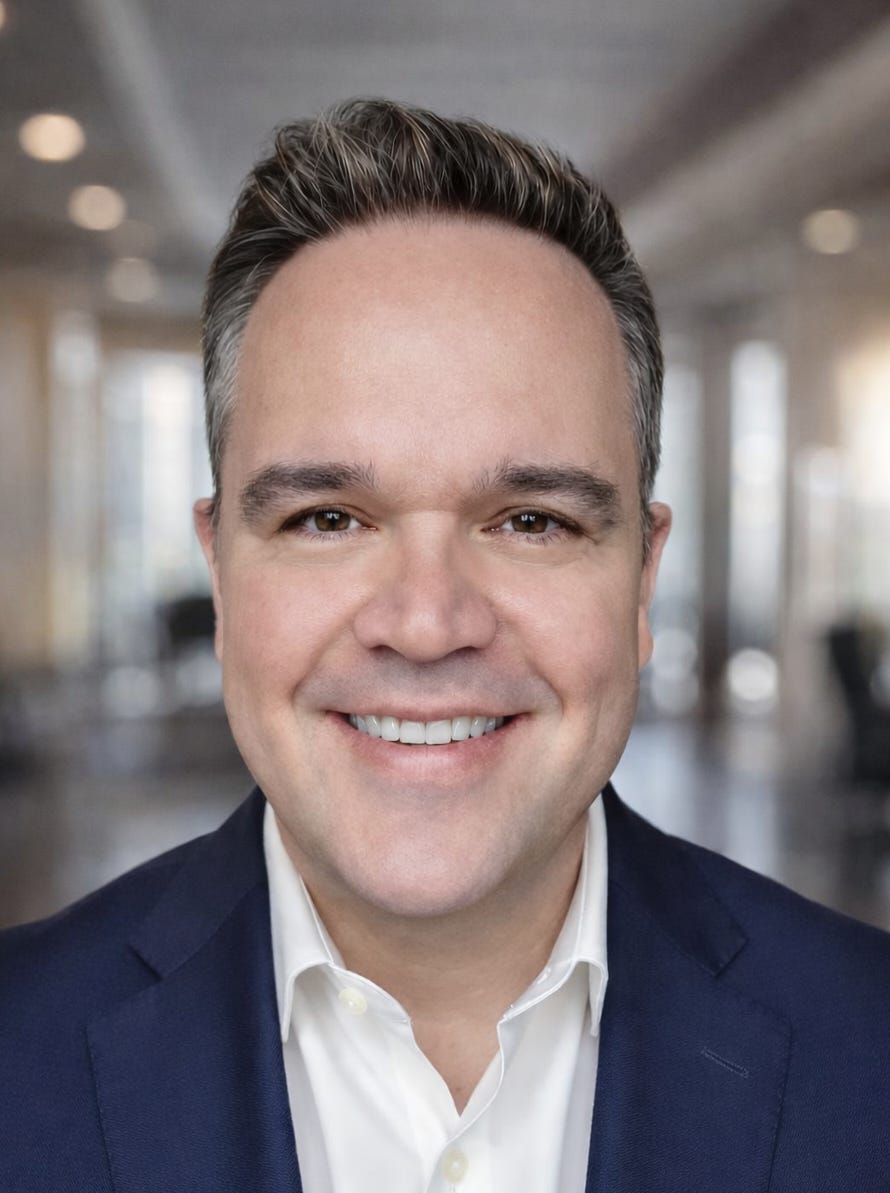
- MSOs have quietly become the dominant way capital enters regulated professional services. From your perspective, what do lawyers and regulators most misunderstand about how MSOs actually function day to day?
Fredric:
What I find interesting is that most of the anxiety about MSOs is aimed at problems that already exist in law firms today, while missing the risks that actually matter. One reaction I hear a lot is some version of:
“What happens when the corporation starts assigning revenue targets or pressuring lawyers to produce?”
The honest answer is: That already happens. Everywhere.
If someone thinks law firms today, big or small, operate without revenue expectations, performance pressure, or financial incentives, they are mistaken. Those dynamics did not arrive with MSOs.
At the same time, I often hear the opposite concern from people in finance or private equity: how do we control what the lawyers do?
You can’t. And you wouldn’t want to anyway.
The moment you try to control professional judgment, you break the thing you are investing in. You don’t get better outcomes. You get defensive behavior, workarounds, and eventually worse service for clients.
There are greedy actors in every system. There always have been. You see it in fully private markets and even in single-payer public systems. The presence or absence of an MSO doesn’t magically create or eliminate that risk.
Which leads to what I think the real danger actually is…
The biggest risk with MSOs isn’t some sudden collapse of professional ethics. The real risk is more boring and more devastating. Everything gets shittier.
Worse for lawyers.
Worse for staff.
Worse for clients, especially clients.
Worse for trust in the legal system.
Law already has a legitimacy problem. People are skeptical of lawyers. If MSOs make the experience colder, more transactional, more extractive, then we don’t just fail commercially. We damage the profession.
Private equity has earned a reputation, fair or not, for fee stacking and squeezing every last dollar. People feel that in healthcare, in dental, and across industries, where capital has entered. Sometimes that criticism is deserved. Sometimes it isn’t. But the perception is real.
The only defensible question is whether the model makes life better for the people inside it and the people it serves.
- In healthcare, MSOs are often treated as a mature, accepted model. What lessons from healthcare MSOs translate cleanly to legal services, and which ones do not?
Fredric:
In our client solutions department – what most firms would call intake – we refuse to measure how quickly people get clients off the phone or how many signups they produce per hour.
We do the opposite.
We ask our people to help the person on the phone find the right solution, even if that solution isn’t us. Sometimes that means listening longer. Sometimes it means giving information and sending them elsewhere.
That decision costs you something in the short term. It also tells you everything you need to know about whether your system is designed to care or just to convert.
This is a people business. People serving other people who are usually dealing with something stressful, painful, or overwhelming. You cannot care for clients if the people doing the work do not feel cared for themselves. And you cannot fake caring.
Healthcare MSOs didn’t invent efficiency. What they figured out was delegation.
Dentists learned long ago how to spend their time on high-value judgment while trained professionals handle most of the routine work. Lawyers, by contrast, are remarkably bad at this.
Many investors assume law firms are already efficient machines. They are not. Lawyers touch too much. They insist on being involved in things they shouldn’t. They don’t know what not to touch.
Some of this comes from the billable hour. Some of it comes from legal culture. Some of it comes from fear, especially fear of malpractice and loss of control. Everything routes through the same person, which creates a natural bottleneck.
No private equity firm is going to solve that. Capital alone can’t fix it. It takes lawyer-to-lawyer conversations about trust, delegation, and how to let go without losing sleep at night.
- Critics often argue that MSOs are just “ABS by another name.” Do you agree, or do you think MSOs and ABS solve fundamentally different problems?
Fredric:
When someone says that MSOs are just ABS by another name, my first reaction is that they don’t really understand either model.
An ABS is about ownership.
An MSO is about enablement.
One owns the thing.
The other supports the thing without owning it.
Some people want to use an MSO as a backdoor way to impose control on professionals. That is wrong, unethical, and it doesn’t work.
A properly designed MSO does the opposite. It builds professional independence in by design. The separation is intentional. The MSO exists to support and help, not to control or dominate.
At an abstract level, lawyers need to let go of fear.
Concretely, they need to let go of the idea that they must be the one communicating with clients all the time.
Clients want information. They want updates. They want to be heard. They want reassurance. Much of that does not require a law degree. It requires training, empathy, and good systems. What is routine for us is often the most important thing in a client’s life at that moment. Sometimes they need information. Sometimes they need someone to listen. Sometimes they need a bit of coddling.
Investors often assume clients want more lawyer time. That instinct is usually wrong. It slows everything down and makes the experience worse for everyone.
- Looking ahead, do you expect MSOs in legal services to become more standardized and transparent, or to remain highly bespoke and opaque? What drives that outcome?
Fredric:
I hope great cultures become standard. I hope people see that people-first systems are not just humane, but profitable and durable.
I would love to see legal support organizations, not just MSOs in name, become the norm. Organizations whose job is to support the practice of law with great operations so lawyers can focus on judgment and care.
I would also love to see something else become standard. Health. Fewer addictions. Lower suicide rates. Lawyers who are not quietly breaking themselves just to survive.
What I never want standardized is the idea that legal services are a commodity or that this isn’t a deeply personal business. Tools and technology should create more time for clients, not less. If we do this right, we can change how people think about lawyers, especially personal injury lawyers, for the better.
- For lawyers, firms, or investors trying to decide between an MSO structure and an Arizona-style ABS, what factors should actually drive that choice?
Fredric:
When lawyers ask me whether they should choose an MSO, an ABS, or stay independent, I think they’re usually asking the wrong question.
The real question is: what do you want your life to look like?
What do you want your work to feel like? What matters to you five or ten years from now?
If you don’t know where you’re trying to go, it doesn’t really matter which road you take.
I can’t answer that question for anyone. But I’m always happy to talk with founders and help them think it through. Structure should follow intent, not the other way around.
Conclusion
The future of legal MSOs may be standardized and transparent, or bespoke and opaque, but the outcome will be driven less by regulation than by incentives, sophistication, and how honest the industry is willing to be about how these structures actually work day to day.
The harder, quieter work is deciding what kind of professional life we’re trying to build. One where lawyers are supported but not smothered. Where clients feel cared for rather than processed. Where efficiency creates space for judgment instead of crowding it out. Whether that future runs through an ABS, an MSO, or something else entirely matters less than whether the model makes the work healthier, more humane, and more worthy of trust. Structure should follow intent—and the industry would do well to spend more time getting honest about that intent before arguing about the wrapper.
As Fredric makes clear, the real challenge isn’t structural or regulatory—it’s human.
*Disclaimer*
The content of this post is intended for general information only and should not be relied on as legal advice or interpreted as creating an attorney-client relationship. Although care has been taken to present accurate information, requirements and facts can change, and readers should confirm details with the Arizona Supreme Court or other applicable regulators before acting. The views expressed are solely my own and/or those of my quoted guests and do not reflect the positions of the Arizona ABS Committee or the Arizona Supreme Court. This post does not constitute official meeting minutes, which are published separately on the Arizona Supreme Court’s website.


